
If you have ever walked into a room and thought, “The air in here feels stale,” you may have wondered whether an air quality sensor is worth adding to your home.
These small devices have become increasingly popular, and for good reason. They can provide useful information about things such as particulate matter, carbon dioxide, temperature, humidity, and, depending on the model, certain gases or volatile organic compounds (VOCs). But are they a must-have for every household? Not necessarily.
🏠 What Can an Air Quality Sensor Actually Tell You?
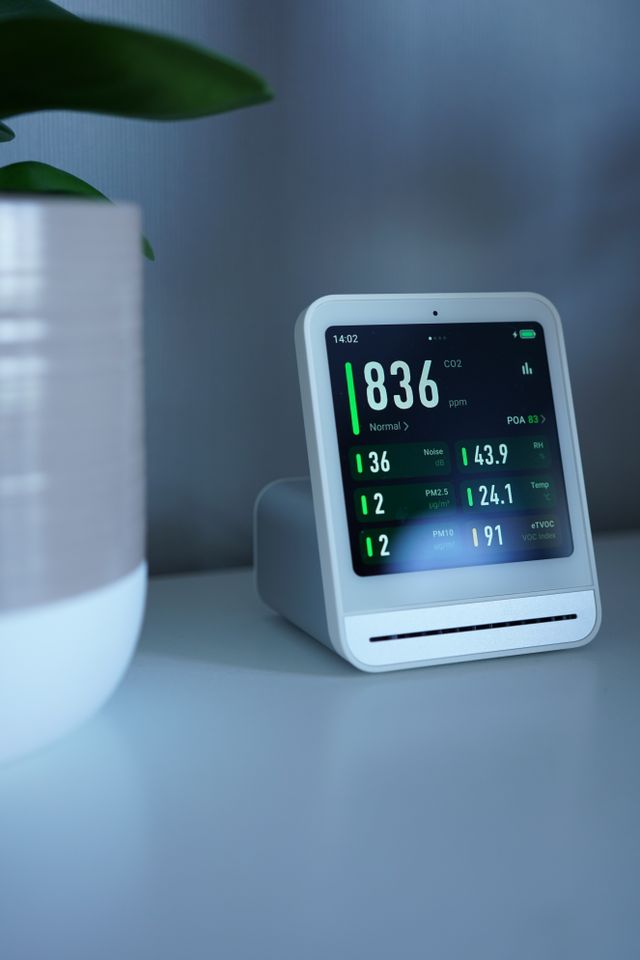
An indoor air quality monitor can be a useful information-gathering tool. For example, you may notice particulate levels rise when cooking, humidity climb after a shower, or carbon dioxide increase when a room is occupied with the windows closed.
That information can help you spot patterns and make practical changes, such as improving ventilation, using a range hood, controlling moisture, or running an air cleaner.
However, there is an important distinction: a consumer air sensor is not a complete indoor air quality inspection. Most devices only measure the specific pollutants they are designed to detect, and accuracy can vary with placement, temperature, humidity, and the sensor itself. The EPA also notes that there are limitations in the performance and interpretation of many low-cost indoor monitors.
💡 When Does One Make Sense?
An air quality sensor can be a worthwhile purchase if you want to understand what is happening inside your home over time.
It can be particularly useful in homes where there are concerns about high humidity, poor ventilation, cooking-related particles, wildfire smoke, or general stuffiness. A monitor can turn something you notice into measurable information.
Humidity monitoring is especially practical. Keeping indoor relative humidity below 60%, with 30–50% generally considered ideal by the EPA, can help with moisture management.
⚠️ Don’t Let the Gadget Create False Confidence
This is where a little caution goes a long way.
A monitor showing “good” air does not mean every possible indoor air hazard has been ruled out. Radon, for example, requires appropriate testing, while smoke and carbon monoxide should be addressed with properly installed, certified alarms rather than relying on a general-purpose air quality monitor.
Likewise, a sudden high reading does not automatically mean there is a dangerous condition. It is a reason to investigate, not a reason to panic.
The Bottom Line
An air quality sensor can be a useful extra set of eyes, but it should not replace good home maintenance, proper ventilation, moisture control, carbon monoxide and smoke alarms, or appropriate testing for specific hazards.
Think of it as a dashboard rather than a mechanic. The value is not in having another number on the wall—it is in using that number to make smarter decisions about the home.
Recent Comments